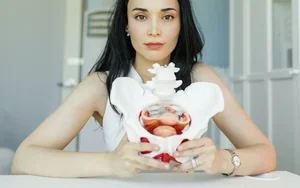
Every week, Renova members send their questions to Nasim, and she answers them in a live Q&A. This week's questions came from members learning how the nervous system shapes pain: whether to pause intercourse, how to involve a partner, and what to do when mirror work feels too hard.
Below are the questions members asked, with Nasim's answers. We've rewritten each question without names or personal details. This is general education, not medical advice.
Key Takeaways
Pausing attempts at intercourse while you heal is temporary, and it helps break the cycle of pain, fear and muscle guarding.
Learning together can help a partner understand why the pause matters.
Your brain and muscles can both learn new patterns, which makes the nervous system the biggest part of recovery.
If mirror work brings up past trauma, start with gentler steps and consider support from a counsellor or sex therapist.
Jaw clenching and pelvic floor tension are often connected.
Endometriosis can cause pelvic floor overactivity, nerve sensitivity and painful sex.
Should You Stop Trying Intercourse While Healing Painful Sex?
Yes, for now. Nasim recommends pausing attempts at intercourse, and pausing any attempt to force insertion, while you work through the program. This is not permanent.
Every painful attempt can strengthen the cycle you are trying to break. The goal right now is to build a sense of safety, calm and relaxation. Step by step, you will reach a point where you can bring intimacy back on your own terms, moving gradually from tools to intercourse.
What Is the Pain, Fear and Muscle Guarding Cycle?
When something has hurt before, your brain expects it to hurt again. That fear makes the pelvic floor muscles tighten to protect you, and tight muscles make insertion more painful. The pain then confirms the fear, and the cycle repeats.
Understanding this cycle explains why pausing helps. Each calm, pain-free experience teaches your nervous system something new instead of reinforcing the old pattern.
Should Your Partner Learn About Vaginismus With You?
In many cases, yes. Members have shared that the education made things clearer for their partner as well as for themselves, including why it helps to pause intercourse for now.
If you would rather go through the program on your own, that is fine too. You can share the parts you find helpful. It can open a conversation that is otherwise hard to start.
Can Your Brain Really Change How Your Body Responds to Touch?
Yes. Thanks to neuroplasticity, your nervous system can learn new patterns and habits throughout life. That includes how you respond to touch, intimacy and pain, even when those responses have built up over years.
Your brain and your muscles are both flexible and happy to learn. They just need to be guided in the right direction, which is most of the work. Once your nervous system changes, everything else starts to change more easily.
That is why it helps to slow down and let your brain and nervous system relearn before working directly on the muscles. Creating a calm, relaxing space for yourself is a good place to start.
What if Mirror Work Feels Too Hard Because of Past Trauma?
Looking at your anatomy in a mirror helps you get familiar with your body. For women with a history of trauma, it can feel overwhelming. Pleasure Path includes a gentler, step-by-step guide to help you ease into it.
This is not trauma therapy. If the gentler steps still feel too hard, Nasim recommends seeing a counsellor or sex therapist alongside your physiotherapy work. She suggests this to many patients in her clinical practice, especially when anxiety or past trauma could hold back progress.
Is Jaw Tension Connected to Your Pelvic Floor?
It can be. Many women working on pelvic floor tension notice they also clench their jaw, grind their teeth or have jaw (TMJ) pain. The two are often connected.
Notice when you clench during the day. When you catch it, let your jaw soften along with your breath, the same way you relax your pelvic floor.
How Can You Prepare for an Endometriosis Appointment?
Endometriosis diagnosis is often delayed by many years. Arriving prepared helps you advocate for yourself.
Nasim's free Understanding Endometriosis guide works like a mini booklet:
Symptoms: a full list sorted by category, including symptoms beyond the reproductive organs.
Symptom diary: track your symptoms and their patterns over time.
Report: pull it together into a clear summary to bring to your appointment.
The guide is useful whether your endometriosis is confirmed or suspected. Endometriosis can also cause pelvic floor overactivity, nerve sensitivity and pain with intercourse, which is why it often comes up alongside painful sex.