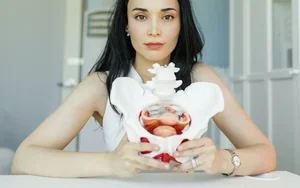
Every week, Renova members send their questions to Nasim, and she answers them in a live Q&A. This week started with one of the most common questions she hears in the clinic: can Botox fix vaginismus? Members also asked what to do when a practice feels too hard and how to stay consistent.
Below are the questions members asked, with Nasim's answers. Each question has been rewritten without names or personal details. This is general education, not medical advice.
Key Takeaways
Botox may reduce pelvic floor muscle tension, but results vary a lot and it is not a quick fix.
Botox does not address fear, anxiety or the nervous system response behind vaginismus.
If you consider Botox, see a medical specialist trained in pelvic injections.
If a practice makes you anxious, step back to a level that feels comfortable. Never push through pain or anxiety.
Your nervous system can learn a new response, even after years of pain.
Small daily steps build consistency better than an all-or-nothing approach.
Does Botox Work for Vaginismus?
Sometimes, partly. Botox blocks the signal between nerves and muscles, which can ease the involuntary tightening of the muscles at the vaginal entrance. That tightening is what can make penetration very painful or impossible.
How well it works varies a lot from person to person, and more research is needed. Botox also does not touch the fear of insertion, the anxiety about anything coming close to the vaginal area, or the way your brain and nervous system respond to touch. Those are still there after the injection.
Should Botox Be Combined With Other Treatments?
Yes. Botox may help some women as one part of a wider plan, alongside:
Pelvic floor physiotherapy
Retraining how your brain and nervous system respond
Counselling or sex therapy for any emotional or psychological factors
Many women expect to get Botox and then be able to insert anything comfortably. It doesn't work that way. On its own, it rarely gives the results people hope for. Read more about Botox and the nervous system.
Who Should Give Botox for Vaginismus?
In Canada, Nasim has noticed Botox being offered more often outside specialist offices. Choose carefully:
A medical practitioner.
A specialist trained in injections in the pelvic region, which is a very sensitive area.
Experience treating vaginismus, and in some cases vulvodynia.
There is still no universal dosage, so how the practitioner approaches the injection matters a lot. They should also review your medical history to decide whether Botox suits you at all. Like any medical treatment, it has benefits and risks. Side effects are usually local and temporary, but in rare cases they can affect the whole body.
What Should You Do if a Practice Makes You Anxious?
Take a step back. You don't have to push through pain, anxiety or nervousness, and you shouldn't.
Go back a step: return to an earlier practice or module where you felt comfortable.
Make it smaller: break the practice into bite-sized pieces you can still do consistently.
Build up gradually: move toward the harder practice slowly, from a place of feeling in control.
Nothing needs to be 100%. The aim is gradual, safe and consistent practice, never so much anxiety that you stop altogether.
Can Your Nervous System Change After Years of Pain?
Yes. That is the power of neuroplasticity. Your brain and nervous system are always able to learn and change, no matter how long the pain has lasted.
It takes consistency, repetition and time, and you can't force it to happen faster. Challenge yourself in small steps that feel slightly outside your comfort zone while you still feel fully in control. Learn more about neuroplasticity and pelvic pain.
Do You Need to Finish Every Exercise Before the Next Lesson?
Yes. Pleasure Path is designed to be taken one step at a time. Make sure your body feels ready and comfortable at each stage, and practise enough times before moving on. The more comfortable you are with your current practices, the better.
Why Is It Hard to Stay Consistent Even When You Understand the Information?
This is normal and very common. You can understand everything and still find it hard to do. Each exercise gently takes your brain, muscles and nervous system out of their comfort zone. Even if that comfort zone causes you pain, it is still familiar to your brain.
An all-or-nothing mindset makes it harder. If you think a practice has to be perfect with fast results, or it isn't worth doing, you are more likely to do nothing. Instead:
Do one small thing every day. On stressful days, during your period or when you feel unwell, choose what you can manage.
Be realistic about time. Set aside what you can, daily or three to four times a week, and start there.
Redefine consistency. A quick body scan, or noticing when you rush and slowing down, still counts.
Keep your breathing practice. Once you learn it, even five minutes a day helps your nervous system calm down.
If something is hard to do, it is not always about you. Sometimes the plan needs adjusting to make it doable.