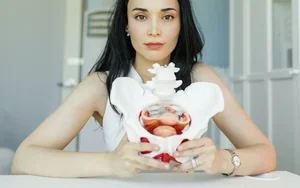
Every week, Renova members send their questions to Nasim, and she answers them in a live Q&A. This week's questions covered two topics many women with pelvic pain face: starting a hormonal IUD before an endometriosis diagnosis, and how to exercise when your pelvic floor is tight.
Below are the questions members asked, with Nasim's answers. Each question has been rewritten without names or personal details. This is general education, not medical advice, so talk to your doctor about what fits your situation.
Key Takeaways
Doctors can start evidence-based treatment, such as a hormonal IUD, when endometriosis is suspected. A firm diagnosis is not required first.
Response to a hormonal IUD varies. Lighter bleeding is the most common benefit, and pain relief is less predictable.
Doctors usually watch your response for 3 to 6 months. Keep a symptom journal during that time.
A fever or a positive pregnancy test after an IUD needs medical attention right away.
An expert ultrasound or MRI can help rule out other causes of heavy bleeding and pain.
You can keep exercising with a tight pelvic floor. Lower the intensity and make your cool-down a priority.
Can Your Doctor Start Hormonal Treatment Before an Endometriosis Diagnosis?
Yes. Diagnosing endometriosis starts with your clinical history: your symptoms, how they show up and how severe they are. When that history points to suspected endometriosis, it is evidence-based for a doctor to begin treatment while other diagnostic steps are pending.
A firm diagnosis usually means a laparoscopy, which is a surgical procedure with its own risks and often a long wait. Endometriosis diagnosis is already delayed for many women, so doctors usually prefer not to delay treatment further.
A thorough history should cover more than your period. Your doctor should ask about:
Pelvic pain and painful intercourse (dyspareunia)
Pain with medical exams
Heavy bleeding
Nausea, lightheadedness or dizziness
Bowel and bladder symptoms
Breathing patterns, mobility and pain elsewhere in your body
Many doctors don't ask about all of these. Nasim's free Understanding Endometriosis guide helps you prepare for your appointment so these details are not missed.
Does Treatment Stay the Same With or Without a Laparoscopy?
Not exactly. When a doctor says the treatment will be the same either way, they usually mean the first step will be the same. They would start a hormonal treatment such as an IUD now rather than have you wait for surgery.
A laparoscopy can still change your care. During a diagnostic laparoscopy, the surgeon may also remove lesions or endometriomas, and hormonal therapy may follow afterwards.
How Can a Hormonal IUD Help if Endometriosis Is Outside the Uterus?
A hormonal IUD sits inside the uterus, but the hormone it releases does not act only there. Part of its effect is systemic, which is how it can help the wider pelvic region.
Response varies a lot, and there is no guaranteed outcome:
Bleeding: heavy bleeding is where most women see a good result. By about a year, many have little or no bleeding.
Pain: many report less pelvic pain, tension and discomfort. Some studies also showed less pain with intercourse and insertion.
Cramping: some women have more intense cramping and feel better once the IUD is removed.
Much of the research on IUDs comes from conditions other than endometriosis, but it is considered an effective treatment for heavy bleeding with endometriosis.
What Should You Expect After an IUD Insertion?
During and right after insertion: cramping, spotting and bleeding. Some women feel nausea, lightheadedness or dizziness.
The first few weeks: bleeding may increase for a while, with spotting and cramping on and off.
3 to 6 months: the usual window your doctor uses to judge your response. Bleeding should gradually become lighter and less frequent.
Around a year: many women have little or no bleeding, with occasional spotting.
Other possible side effects include headaches and breast tenderness. The goal is for symptoms to ease enough that you feel more functional day to day.
How Can IUD Insertion Be Less Painful?
If you have pain with medical exams or insertion, or the thought of the procedure makes you anxious, tell your doctor before booking. Ask how they will manage pain: a local anesthetic, sedation, or insertion under general anesthesia.
When pain and pelvic floor muscle overactivity are both concerns, insertion under anesthesia may be considered. Anxiety about the procedure is a valid reason to have this conversation.
When Should You Call Your Doctor After an IUD?
Fever: contact your doctor right away, or go to urgent care.
A positive pregnancy test, especially with nausea or lightheadedness: let your doctor know immediately.
Symptoms getting worse each week, or more than you can manage: you don't have to wait the full 3 to 6 months. Your doctor may consider removing the IUD.
Keep a symptom journal from the day of insertion. Track your bleeding, pain out of 10, what the pain feels like (crampy or sharp), where it is, your sleep and any medication you take. After 3 to 6 months, you can show your doctor exactly where you started and where you are now. The Understanding Endometriosis guide includes a rating system to help.
Should You Ask for an Ultrasound or MRI?
It is worth asking. Imaging is the second step in diagnosing endometriosis, and it can happen alongside an IUD.
An expert ultrasound, often transvaginal if you can tolerate it, can show endometriomas, adenomyosis and deep endometriosis. It can also find polyps and fibroids, which cause heavy bleeding and spotting too. It should be done by someone with advanced training in reading ultrasounds for endometriosis.
A clear ultrasound does not rule out endometriosis, especially superficial endometriosis. It can still show whether something deeper needs attention.
The next options are more invasive:
Laparoscopy: done through the abdomen. It can diagnose endometriosis and, depending on your goals such as fertility or bowel symptoms, remove lesions.
Hysteroscopy: looks inside the uterus.
What if You Feel Dismissed by Your Doctor?
A good doctor explains their reasoning: why they recommend something, what outcome they expect, the timeframe and the next step. You should not have to guess.
Give your doctor the chance to hear your concerns. If you still feel dismissed, trust your gut. Looking for a second opinion is always reasonable.
While you work through medical care, keep addressing the muscle side of your pain too. Pelvic floor tension often adds to endometriosis pain, and calming it helps whatever your diagnosis turns out to be.
Can You Exercise With Vaginismus or a Tight Pelvic Floor?
Yes. Nasim does not ask patients to stop exercising completely. The goal is to adjust the intensity and frequency to what your body tolerates.
If your symptoms are flaring, with severe pelvic pain, heavy bleeding or nausea, don't push through tension-building workouts. Start gently instead:
Breathing exercises, body scanning and gentle stretching
Shorter sessions: if you used to train for an hour, start with 20 minutes and add 5 minutes each week
Low impact options: walking, the elliptical, easy cycling, swimming and yoga
Watch how you feel the next day. If symptoms flare, do a little less next time. As tension eases, start building strength with your body weight.
How Should You Change Your Gym Routine?
When you lift, push or pull, your core engages and your pelvic floor tenses with it. You can keep training with a few changes:
Lower the weight to a light or moderate challenge, or use your body weight. Focus on control. Your muscles still get worked without heavy loads.
Warm up with dynamic stretches and gentle mobility before you start.
Cool down for 15 to 20 minutes before you leave. Nine out of 10 patients tell Nasim they skip this.
Breathe while you stretch. Hold static stretches with diaphragmatic breathing and let your pelvic floor relax.
Tension is rarely only in the pelvic floor. Check your shoulders, jaw, abdomen, glutes, hamstrings, inner thighs, calves and feet. Finish each session calm rather than tense, then build back up gradually.